If you are learning SEO, you will hear the word backlink again and again.
But what is a backlink? Why are backlinks important? How do they help a website? And what makes one backlink useful while another may have little value?
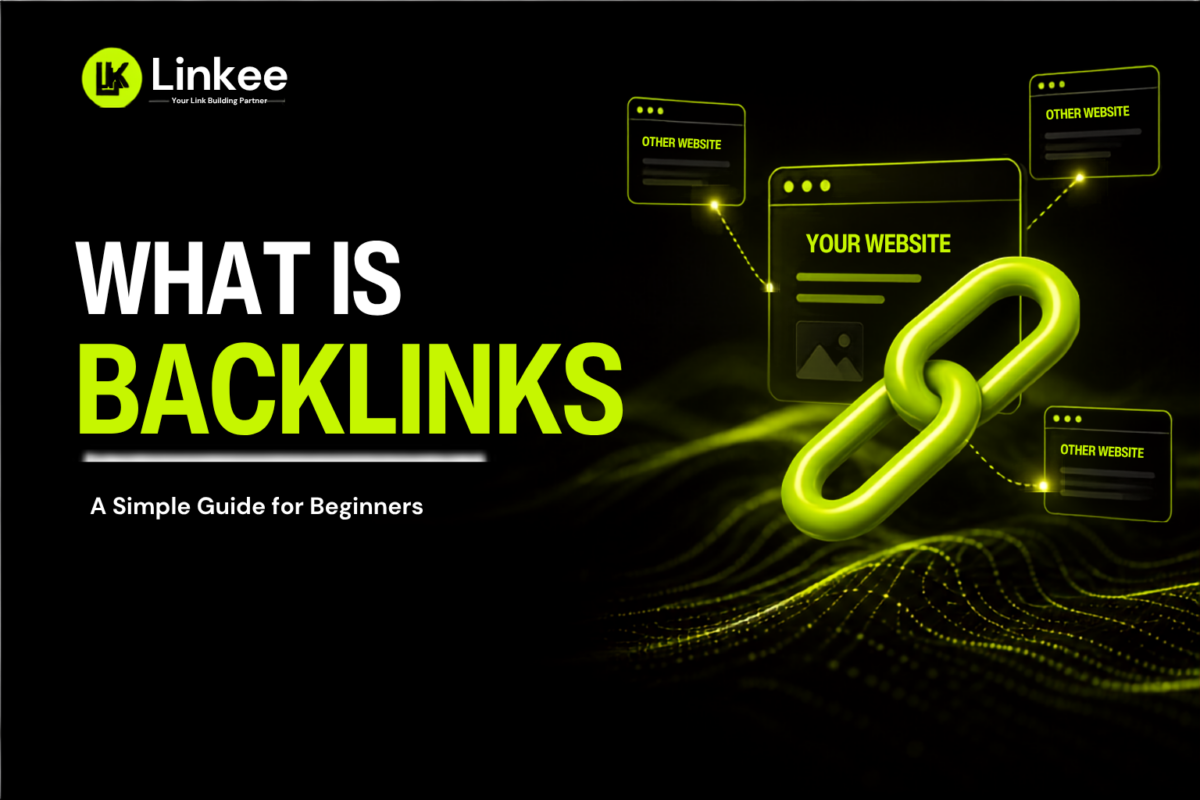
In simple terms, a backlink is a link from one website to another website. For example, if a blog mentions your website and adds a link to one of your pages, your website has received a backlink.
Backlinks are an important part of SEO because they can help search engines discover pages, understand relationships between websites and topics, and find signals about the reputation of a page.
However, not every backlink has the same value. A relevant link from a trusted website can be much more useful than hundreds of random or low-quality links.
In this guide, we will explain backlinks in simple terms and cover everything a beginner needs to know.
What Is a Backlink?
A backlink is a link on another website that points to your website.
For example, imagine you have a website about project management. Another website publishes an article about project management software and links to one of your pages.
That link is a backlink for your website.
You can think of it like this:
Website A → links to → Website B
Website B receives the backlink.
Backlinks are also called inbound links or incoming links because they point toward your website from another website.
What Does a Backlink Look Like?
A backlink is usually placed behind clickable text, called anchor text.
For example:
Learn more about [project management tools].
If another website links the words “project management tools” to your website, that link is a backlink.
The words used for the link can also give users and search engines some context about the page being linked to.
Simple Example of a Backlink
Let’s say you run a website called Example.com and publish an article called:
“10 Best Project Management Tools for Small Teams”
Another website writes an article about managing remote teams.
Inside its article, it says:
Teams can use project management tools to organize tasks, deadlines, and communication.
It then links the words project management tools to your article.
You have now earned a backlink from that website.
The important point is that the link is coming from another website to your website.
If you link from one page of your own website to another page on the same website, that is an internal link, not a backlink.
How Do Backlinks Work?
Backlinks create a connection between two websites or pages.
When one website links to another, users can follow that link to visit the other page. Search engines can also use links to discover and understand pages across the web.
For example:
Website A → Website B
Website A is referring its visitors to Website B.
If the two pages are closely related, the link can also provide useful context.
For example, a link from an article about SEO tools to a detailed guide about SEO reporting makes sense because the topics are related.
On the other hand, a link from an unrelated website about cooking to an SEO website may not provide the same level of relevance.
This is why backlinks should not be judged by number alone.
The source of the link, the page where it appears, the surrounding content, and the reason for the link all matter.
Why Are Backlinks Important for SEO?
Backlinks can be useful for SEO for several reasons.
1. They Can Help Search Engines Discover Pages
Search engines use links to find and navigate between pages on the web.
A backlink can help search engines discover a page they may not have found as easily through other paths.
However, having a backlink does not guarantee that a page will be indexed or rank well.
2. They Can Support a Page’s Reputation
A link from another website can act as a reference.
If a respected website naturally links to your content because it finds it useful, that can be a positive signal about your website or page.
This does not mean every backlink automatically improves rankings.
The quality and context of the link matter.
3. They Can Bring Referral Traffic
Backlinks are not only about search rankings.
People can click a backlink and visit your website.
For example, if a popular industry website links to your guide, some of its readers may click the link and become visitors to your site.
This can make a relevant backlink valuable even when it does not directly improve rankings.
4. They Can Help Build Awareness
When other websites mention and link to your website, more people can discover your brand.
Over time, useful mentions and links can help your website become better known within your industry.
What Makes a Good Backlink?
A good backlink is not simply a link from a website with a high metric.
A useful backlink usually has a good reason to exist and fits naturally into the content.
Here are some things to look for.
1. Relevance
Relevance is one of the most important things to consider.
A link should ideally come from a website, page, or article related to your topic.
For example, if you sell CRM software, a link from a website that regularly covers sales, customer management, or business software is more relevant than a random website with no connection to your topic.
2. A Relevant Linking Page
The website itself is not the only thing that matters.
The specific page containing your backlink should also make sense.
For example, a CRM website receiving a link from a page about customer relationship management is a stronger topical match than receiving a link from an unrelated page on the same website.
3. Natural Placement
A useful backlink should fit naturally into the article.
It should help the reader understand the topic or find additional information.
A link placed naturally inside a useful paragraph is generally more meaningful than a link placed somewhere only to manipulate search rankings.
4. Useful Context
The words around a backlink can help explain why the link exists.
For example, a paragraph discussing how to choose CRM software that links to a detailed CRM guide has clear context.
The link makes sense because it gives the reader more information.
5. A Real Audience
A website with a real audience can provide value beyond SEO.
If people actually read the page and click the link, the backlink can send qualified visitors to your website.
This is one reason you should not judge backlinks only by SEO metrics.
6. A Trusted Website
The website should have a good reputation and useful content.
A link from a trusted, established website can be more valuable than a link from a website created mainly to sell or exchange links.
What Is a Bad Backlink?
A bad backlink is generally a link that provides little value to users or exists mainly to manipulate search rankings.
Some examples include:
- Links from spam websites
- Links from completely unrelated websites
- Links created as part of link schemes
- Large numbers of low-quality links created only for SEO
- Links from pages made mainly to place links
- Excessive use of keyword-rich anchor text
- Links placed in content with little or no useful information
This does not mean that every link from a small website is bad.
A small website can still publish excellent content and provide a useful, relevant backlink.
The main question should be:
Why does this link exist, and does it make sense for the reader?
Backlink Relevance: Why Context Matters
One of the biggest mistakes beginners make is looking only at website metrics.
For example, someone may see a website with a high Domain Rating (DR) and immediately assume that any backlink from it must be valuable.
That is not always true.
A backlink should also make sense in its context.
You can look at relevance at several levels:
Domain Relevance
Is the website related to your industry or topic?
Page Relevance
Is the specific page related to the page you want to promote?
Content Relevance
Does the surrounding article naturally discuss your topic?
Audience Relevance
Are the people reading that page likely to be interested in your website?
Search Intent
Does your page help answer the same type of question or need discussed on the linking page?
For example, if a website publishes an article about choosing accounting software for small businesses and links to a useful accounting software comparison, the connection is easy to understand.
Relevant backlinks are links that come from websites, pages, and content closely related to your topic. This type of context is much more useful than chasing links simply because a website has a high SEO metric.
Backlinks vs. Internal Links vs. External Links
These three terms are often confusing for beginners.
Backlink
A backlink is a link from another website to your website.
Example:
Another website → Your website
Internal Link
An internal link connects two pages within the same website.
Example:
Your blog post → Another page on your website
Internal links help users and search engines navigate your website.
External Link
An external link is a link from your website to another website.
Example:
Your website → Another website
So, the easiest way to remember them is:
| Link Type | Comes From | Points To |
|---|---|---|
| Backlink | Another website | Your website |
| Internal link | Your website | Your website |
| External link | Your website | Another website |
Dofollow vs. Nofollow Links
You may also hear the terms dofollow and nofollow when learning about backlinks.
What Is a Dofollow Link?
A normal link does not need a special nofollow instruction.
People often call these links dofollow links, although “dofollow” is not a special HTML attribute.
These links can be followed by users and crawlers.
What Is a Nofollow Link?
A website can add a nofollow attribute to a link to tell search engines that the website does not want to pass the same type of ranking signal through that link.
You may see it written as:
rel="nofollow"
Google also recognizes other link attributes, including:
rel="sponsored"for paid or sponsored linksrel="ugc"for user-generated content
A nofollow link is not necessarily useless.
People can still click it, and it can still bring referral traffic and help people discover your brand or content.
What Is Link Building?
Link building is the process of getting or earning backlinks to your website.
A backlink is the link itself.
Link building is the work you do to earn or acquire that link.
For example, creating a useful research report that other websites want to reference is a link-building strategy.
Guest posting, digital PR, linkable content, relevant partnerships, and other outreach methods can also be used as part of a link-building strategy.
The goal should not be to collect as many links as possible.
A better goal is to build relevant, useful, and trustworthy links that make sense for your website.
How Do You Get Backlinks?
There are many ways to earn backlinks.
Create Useful Content
The best starting point is content that people actually want to reference.
This could include:
- Detailed guides
- Original research
- Statistics
- Case studies
- Useful tools
- Templates
- Industry reports
- Original data
When your content provides something useful, other websites have a reason to link to it.
Digital PR
Digital PR involves creating stories, research, expert insights, or data that journalists and publishers may want to cover.
If they mention your brand and link to your website, you can earn backlinks as a result.
Guest Posting
Guest posting means writing an article for another relevant website.
When the website allows a relevant link to your site, that link can become a backlink.
The focus should be on publishing useful content on relevant websites, not producing large numbers of low-quality guest posts.
Link Insertions
A link insertion involves adding a relevant link to an existing article or page.
For example, if a website already has an article about SEO and your guide provides useful additional information, the website may choose to reference your page.
Earned Mentions
Sometimes websites mention your brand but do not link to it.
You can find these mentions and contact the website to ask whether adding a link would be useful for readers.
The key is to provide a genuine reason for the link.
How to Check Your Backlinks
You can use SEO tools to see which websites are linking to your website.
Google Search Console can show a sample of links to your site.
Third-party SEO tools can provide additional information about backlinks and referring domains.
When reviewing your backlink profile, do not look at the number of links alone.
Look at:
- Which websites are linking to you
- Which pages are linking to you
- Why they are linking to you
- Whether the topic is relevant
- The quality of the linking page
- The anchor text being used
- Whether the links are natural
- Whether the links are bringing useful referral traffic
This gives you a much better understanding of your backlink profile.
How Many Backlinks Do You Need?
There is no fixed number of backlinks that guarantees higher Google rankings.
One high-quality, relevant backlink can be more useful than hundreds of low-quality links.
The number of backlinks you need depends on many factors, including:
- Your industry
- Your competitors
- The quality of your content
- The authority of your website
- The search query
- The strength of competing pages
- The relevance and quality of your backlinks
Instead of asking:
“How many backlinks do I need?”
A better question is:
“What kind of backlinks would genuinely help my website compete for this topic?”
Common Backlink Mistakes Beginners Should Avoid
Focusing Only on DR
Domain Rating can be useful as a quick SEO metric, but it should not be the only thing you consider.
A high-DR website is not automatically a good backlink opportunity.
Buying Cheap Bulk Backlinks
Offers such as “1,000 backlinks for $20” may sound attractive, but large numbers of low-quality links can create more problems than value.
Focus on quality and relevance instead.
Ignoring Relevance
A link from an unrelated website simply because it has a good metric is not always a good choice.
Always ask whether the link makes sense for the topic and audience.
Using the Same Anchor Text Again and Again
Using the exact same keyword as anchor text across many links can look unnatural.
A natural backlink profile normally contains different types of anchor text.
Building Links Only to Your Homepage
Your homepage is not the only page that can earn backlinks.
Useful guides, research, tools, product pages, and other valuable resources can also attract links.
Chasing Quantity Over Quality
More backlinks do not automatically mean better rankings.
A smaller number of relevant and useful links can be more valuable than a large number of poor links.
Frequently Asked Questions
What is a backlink in SEO?
A backlink is a link from another website to your website. Backlinks can help search engines discover pages and can provide referral traffic and other SEO value when they are relevant and naturally earned.
Why are backlinks important?
Backlinks can help search engines discover pages, support a website’s reputation, and bring visitors from other websites. Their value depends on factors such as relevance, context, and the quality of the linking page.
How do backlinks work?
A backlink connects one website to another. Users can click the link to visit the destination page, while search engines can use links to discover and understand relationships between pages.
What makes a good backlink?
A good backlink is relevant, naturally placed, useful to readers, and comes from a trustworthy website or page. The context of the link matters more than simply looking at a website’s SEO metric.
What is a bad backlink?
A bad backlink is generally a link that provides little value to users or is created mainly to manipulate search rankings. Examples can include spammy, irrelevant, or manipulative links.
Are nofollow backlinks useful?
Yes. Nofollow links can still send referral traffic and help people discover your website. They can also contribute to brand visibility even though they carry a different link attribute.
How can I get backlinks?
You can earn backlinks by creating useful content, publishing original research, using digital PR, contributing useful guest posts, earning brand mentions, and building relationships with relevant websites.
How many backlinks do I need?
There is no specific number that guarantees rankings. The quality, relevance, authority, and context of backlinks are more important than simply reaching a certain number.
Are backlinks still important for SEO?
Yes, backlinks remain an important part of how search engines understand the web. However, SEO is not based on backlinks alone. Your content, technical setup, relevance, user experience, and many other factors also matter.
What is the difference between backlinks and link building?
A backlink is the link you receive from another website. Link building is the process of earning or acquiring those backlinks.
Final Thoughts
A backlink is simply a link from another website to your website, but its value is not as simple as counting links.
The best backlinks usually have a clear reason to exist. They come from relevant pages, fit naturally into useful content, and can help readers find something valuable.
If you are new to link building, don’t focus on getting hundreds of links as quickly as possible.
Start by creating something worth linking to. Then look for relevant websites, useful opportunities, and real reasons for them to reference your content.
That approach gives you a much stronger foundation for long-term SEO.
Ready to Build Links That Actually Work?
Join 2,500+ agencies trusting The Linkee.